
Notes, voice capture and reflection, filed against the meeting and the people they belong to.
Open the Diary tab and tap the microphone. Talk. That is the whole thing, and it is deliberately the fastest way in, because the notes that never get written are the ones you meant to type later.
When you stop, the recording is transcribed on your device and saved as a diary entry with the audio attached. If more than one person spoke, you are shown the speakers and can put names to them; the app proposes matches from the people you already have.
Put a name to a voice once and it is remembered, so the same person is recognized next time without being asked.
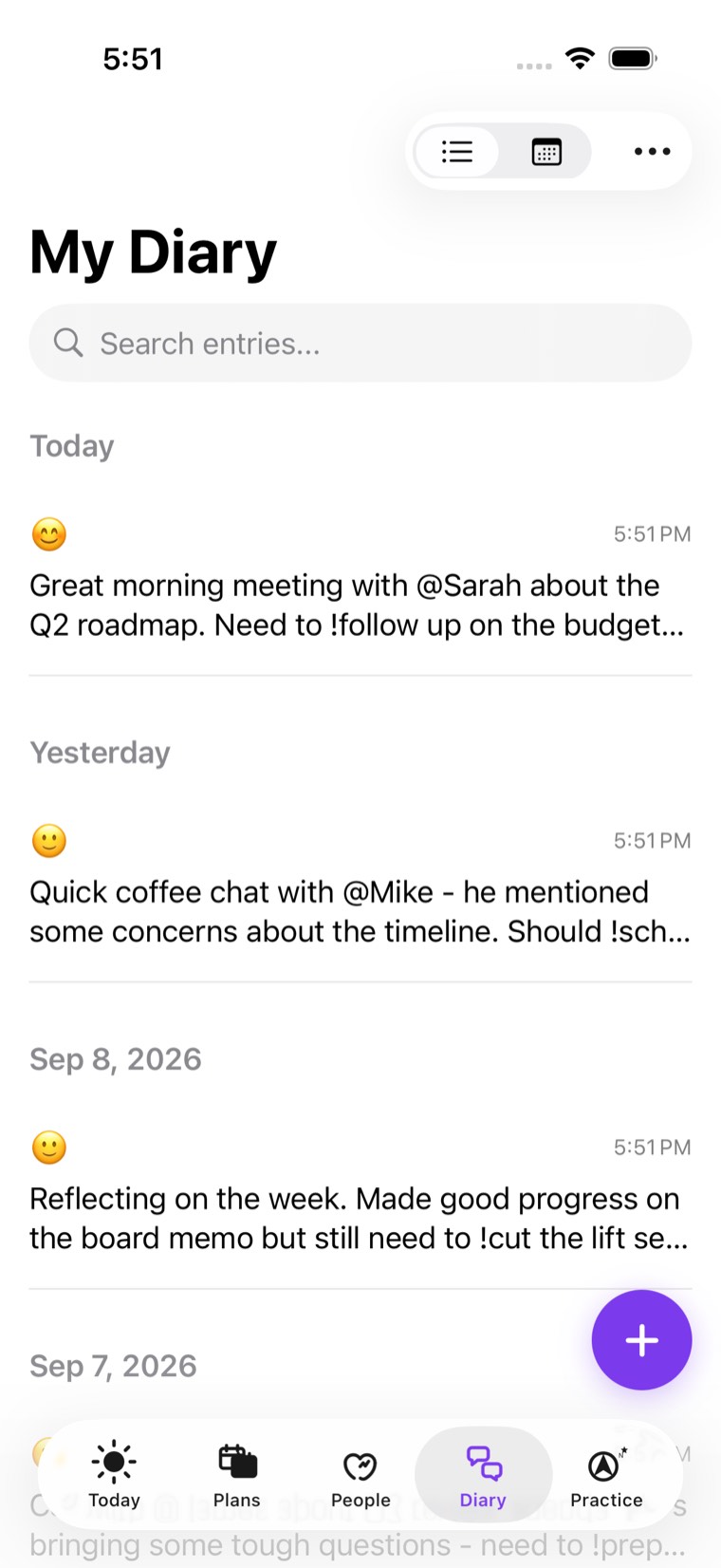
An entry written during or shortly after a meeting is filed against that meeting, and against the people who were in it, without you tagging anything.
That is what makes the diary worth keeping. Six months later the question is never "what did I write on the fourteenth", it is "what did we agree with this client", and the answer only exists if the entry knows who it was about.
Links are shown on the entry and you can remove any of them. Nothing is filed anywhere you cannot see.
Search the Diary tab for a word you remember. Voice recordings are searchable too, because the transcript is stored with the entry.
More often the faster route is sideways: open the person or the client and read their history. Memory tends to hold on to who a conversation was with long after it has lost the date.